Mcity director calls on lawmakers to prioritize AV safety, AI-enabled infrastructure for research funding
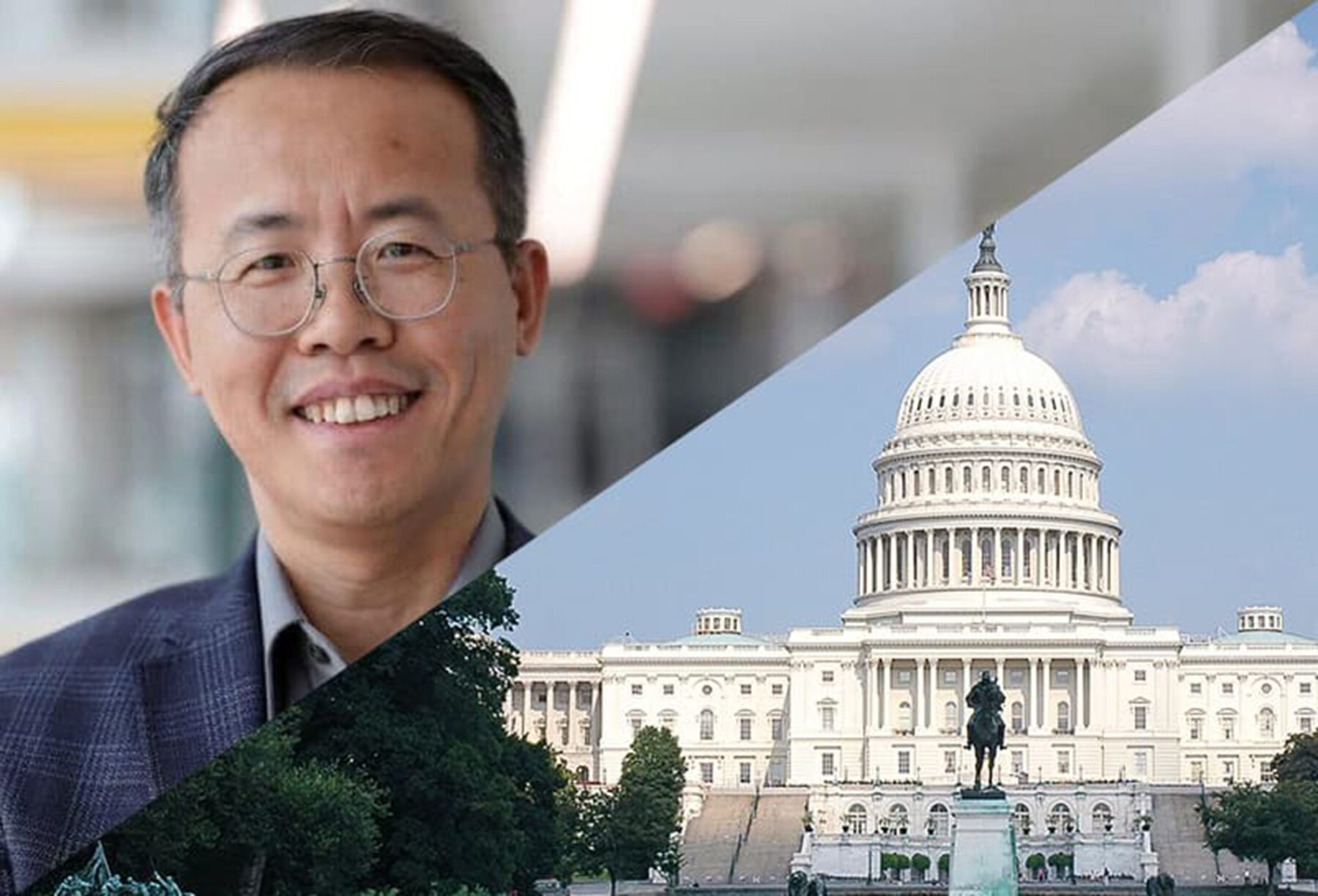
Professor Henry Liu highlighted U-M’s leadership in developing a safety framework for AVs, and AI-enabled infrastructure innovations
The federal government should focus on two priorities as it prepares to reauthorize funding for surface transportation research, University of Michigan Civil and Environmental Engineering Professor Henry Liu said during a hearing Feb. 11 in Washington before a subcommittee of the House Science, Space, and Technology Committee.
First, funding is needed to support research that builds a national framework for autonomous vehicle safety, as Liu outlined in his plan. Second, research enabled by artificial intelligence (AI) to advance digital road infrastructure is necessary to modernize roads, highways, and equipment already in use without requiring extensive and expensive new physical infrastructure.
“The stakes could not be higher,” Liu told the lawmakers. “Roadway deaths and serious injuries remain unacceptably high; supply chains and travel reliability are strained; and artificial intelligence is rapidly transforming the technologies that shape how people and goods move. The United States can lead in transportation innovation, but leadership requires more than basic research and technology invention. It also requires validation, deployment, and a measurable public benefit. In other words, we must strengthen the research-to-impact pipeline.”
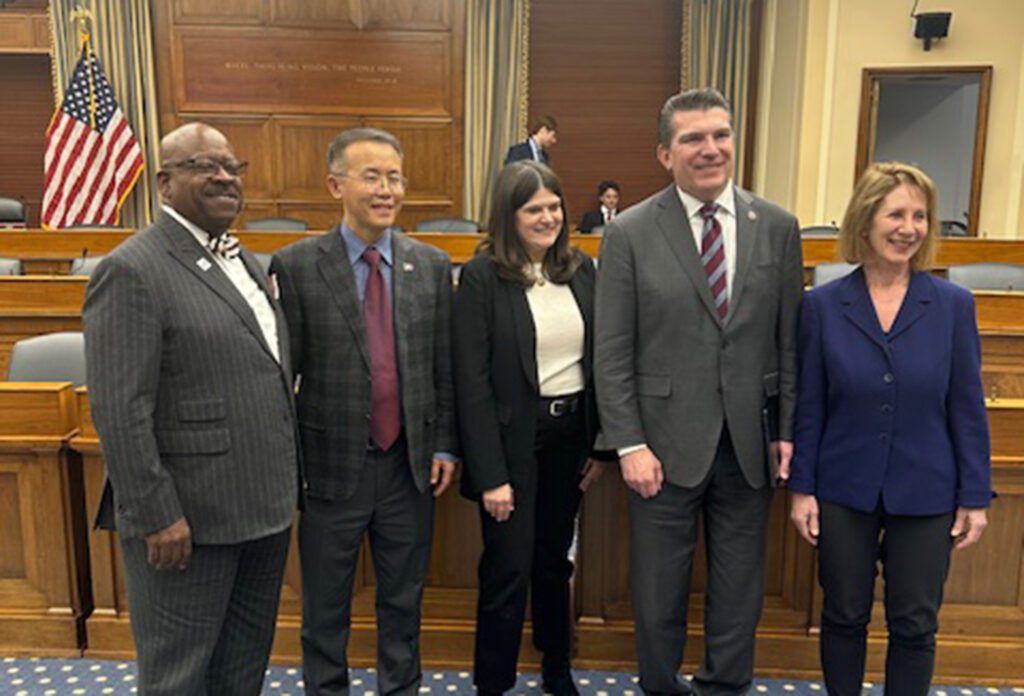
Hon. Greg Winfree, agency director, Texas A&M Transportation Institute, far left, Henry Liu, director of Mcity and the U-M Transportation Research Institute, Rep. Haley Stevens of Michigan, Rep. Jay Obernolte of California, and Diana Furchtgott-Roth, former deputy assistant secretary for research and technology at USDOT, gather for a photo after a Feb. 11, 2026, hearing about surface transportation research before the House Committee on Science, Space and Technology, Subcommittee on Research and Technology. Obernolte is chair of the subcommittee and Stevens is the ranking member.
The hearing came as Congress is preparing to reauthorize surface transportation research funding. The current authorization, funded as part of the Infrastructure Investment and Jobs Act in 2021, expires Sept. 30.
Since AV safety problems are tightly coupled to AI system behavior, and the science of AI safety validation remains underdeveloped, federal investment is needed to build the foundational methods, data infrastructure, and shared testbeds required for rigorous, transparent, and repeatable safety evaluation at scale, Liu told the lawmakers.
He said that research in digital infrastructure can supplement these safety frameworks. “The fastest, most scalable near-term impact often comes from modernizing the infrastructure we already have—especially intersections and corridors—using data, sensors, communications, and AI-enabled operations. The goal is to enable agencies to do more with less,” he told the subcommittee.
State and local agencies already have access to existing anonymous data from road cameras, detectors, and vehicle maintenance logs, but lack the resources to apply this information. Research into smart infrastructure presents an “opportunity to turn fragmented data into actionable, real-time operational intelligence,” according to Liu.
Liu also highlighted that researchers at U-M are already leading the way in developing these technologies. U-M engineers are using Mcity’s purpose-built facility for testing AVs, connected vehicles, and related technologies to build an AV Safety Assessment Program that “offers a practical blueprint for third-party, performance-based assessment.”
The testimony brought to the subcommittee’s attention the opportunity to unify fragmented research in AV testing. “A dedicated program would not regulate technology; rather, it would strengthen the evidence infrastructure needed for transparent, comparable, and auditable evaluation so that innovations can scale responsibly and public trust can be earned through measurable safety performance,” Liu explained. He added that to close this gap, the nation should build a central, privacy-preserving transportation data repository and dedicated compute facilities that qualified researchers can use.
Liu is also director of the U-M Transportation Research Institute (UMTRI), which includes the Mcity public-private mobility research partnership, and the Center for Connected and Automated Transportation, a regional university research center funded by the U.S. Department of Transportation (USDOT).
He pointed out that UMTRI has analyzed anonymous vehicle trajectory data to improve traffic signals and successfully reduce delays and stops at intersections. In addition, UMTRI developed MSight to track vehicle near misses and provide local governments with information to develop countermeasures.
“UMTRI maintains deep partnerships with state and local agencies, industry, and standards bodies, which allows us to translate research into policy-ready guidance and deployable tools,” said Liu. “With these steps, the United States can lead in transportation safety, infrastructure modernization, and the responsible deployment of AI-enabled mobility technologies, grounded in rigorous evidence and measurable public benefit.”