Transportation experts go behind the scenes at Mcity and UMTRI to learn about multidisciplinary research work
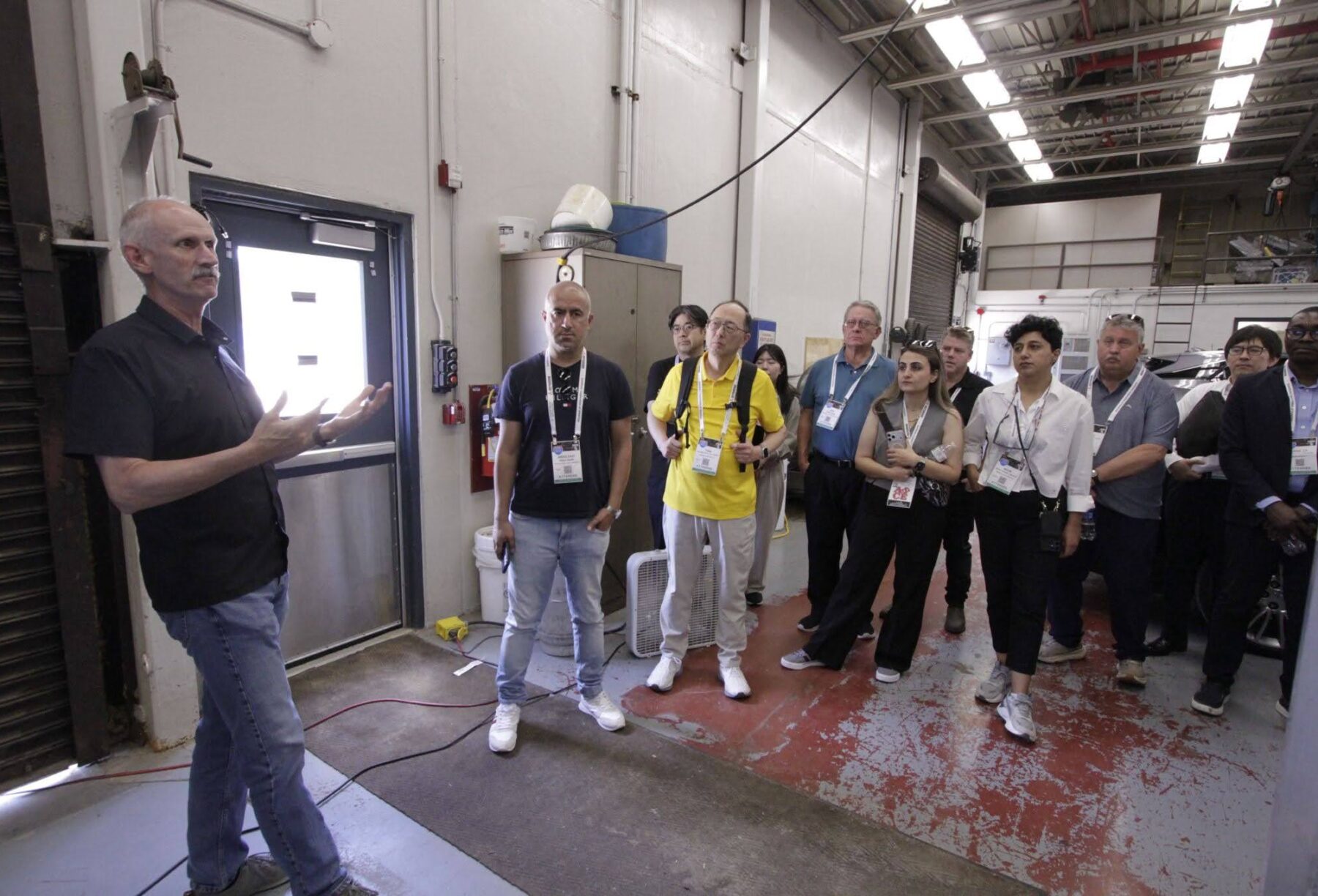
Transportation experts go behind the scenes at Mcity and UMTRI to learn more about multidisciplinary research work
Transportation professionals attending the American Society of Civil Engineers (ASCE) Transportation & Development Conference experienced firsthand how University of Michigan researchers are advancing the future of mobility during a technical tour hosted by the University of Michigan Transportation Research Institute (UMTRI) and Mcity on July 1. The visit highlighted connected vehicle technology, advanced air mobility, and pavement testing, giving attendees an opportunity to engage directly with the researchers who make it happen.
By bringing conference attendees into active research environments, the technical tour demonstrated how UMTRI and Mcity are translating transportation multidisciplinary research into real-world applications that improve safety.
The visit began with a presentation by Mark Gilbert, lead electronics engineer at UMTRI, on the institute’s pavement benchmark profiler program. Gilbert discussed UMTRI’s role in evaluating and benchmarking road roughness through the International Road Index (IRI). The federal government and DOTs across the nation use the IRI, developed at UMTRI, to improve the accuracy and consistency of roadway condition assessments.
Credit: Calvin Tuttle/University of Michigan, College of Engineering, UMTRI
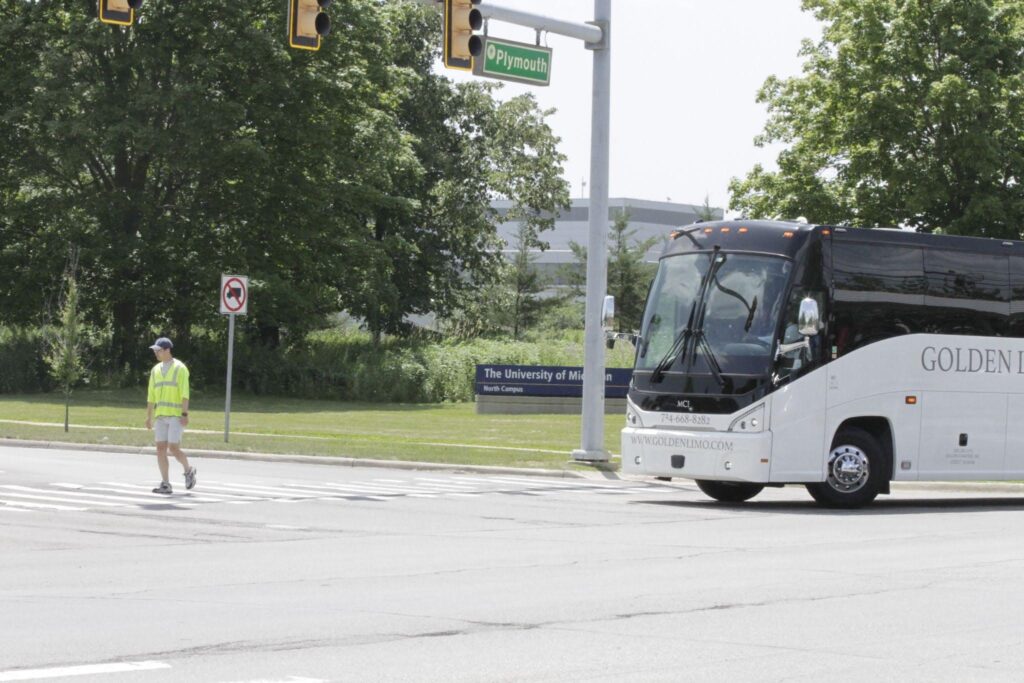
Attendees then took to the streets for a demonstration of the Ann Arbor Connected Environment (AACE), where Andrew Donaldson, lead research engineer at UMTRI, and Debby Bezzina, managing director of the Center for Connected and Automated Transportation (CCAT), showcased the region’s connected vehicle infrastructure and state-of-the-art near-miss alert system. AACE, a research initiative of UMTRI, is deploying cellular vehicle-to-everything technology across the city of Ann Arbor, home of the world’s first large-scale real-world deployment of connected vehicles. CCAT is the U.S. Department of Transportation Region 5 University Transportation Center addressing transportation safety, cybersecurity, mobility, and accessibility. Participants experienced how the system leverages basic safety messages and roadside sensing to detect potential conflicts between vehicles and vulnerable road users, such as bicyclists, and provide real-time alerts to help prevent crashes.
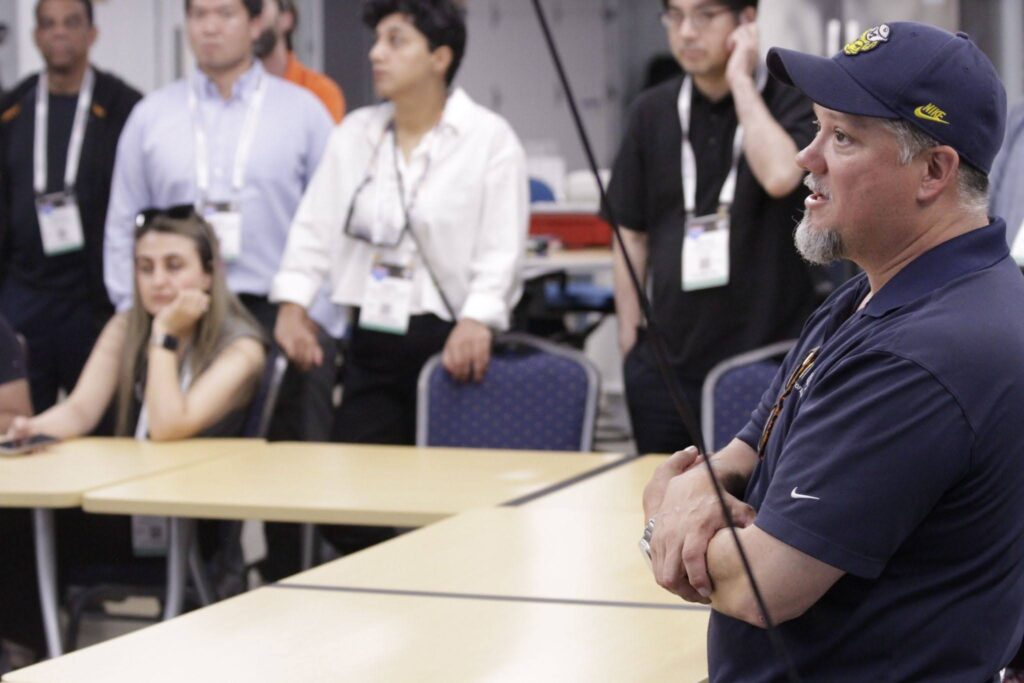
The tour concluded at the Mcity Test Facility, where Jim Lollar, test facilities manager at Mcity, provided an overview of the University’s 32-acre proving ground for connected and automated vehicles. He also highlighted M-air, Mcity’s advanced air mobility initiative, which is expanding research into drones and other low-altitude aircraft to improve transportation, public safety, and emergency response capabilities.
Credit: Calvin Tuttle/University of Michigan, College of Engineering, UMTRI